Consultation on Lane Use Improvements on behalf of the New Zealand Vulnerable Road User Charitable Trust.
The NZVRU Trust is a permanent road safety platform for Aotearoa New Zealand’s most vulnerable road users – walkers, cyclists and horse riders - advocating, educating and promoting the Pass Wide and Slow road safety message and need to Be Seen on the road.
The Trust appreciates the opportunity to give feedback on three of the five proposals and would like to acknowledge the inclusion of horse riders in the mandatory passing distance Rule Change.
1. Allow children aged 12 years and under to ride bikes on footpaths
In this case, the Trust assumes the proposal effects decisions around footpaths where there is no shared use option for walking and cycling because all cyclists, irrespective of age should be using shared path infrastructure where available.
The Trust believes footpaths should be kept as a place where the safety of people on foot is the priority.
The Trust is concerned that allowing bicycles, ridden by children 12 and under with no guidance around speed or supervision, is creating further risk to people on foot, particularly the elderly or people with a disability.
For this reason, we think the approach should be as it is currently - allowing children 6-years and under – to ride on the footpath. Their bikes are smaller and slower, learning to ride in the company of their family.
The Trust believes reducing speeds in areas identified as high use areas for cyclists, continuing to invest in cycle lane infrastructure and or shared pathways, as well as introducing mandatory passing distances and improved targeted education and messaging – will help to create a safer cycling journey for children. We encourage adults to accompany their children on the road, especially if there is concern around confidence and safety.
If the proposal is permitted, the Trust requests there is consideration around
the impact on pedestrian users (previous research has been undertaken)
guidance around a 1-metre gap when bikes, scooters, mobility devices pass a pedestrian on foot.
a maximum speed restriction of 6km for cyclists on the footpath
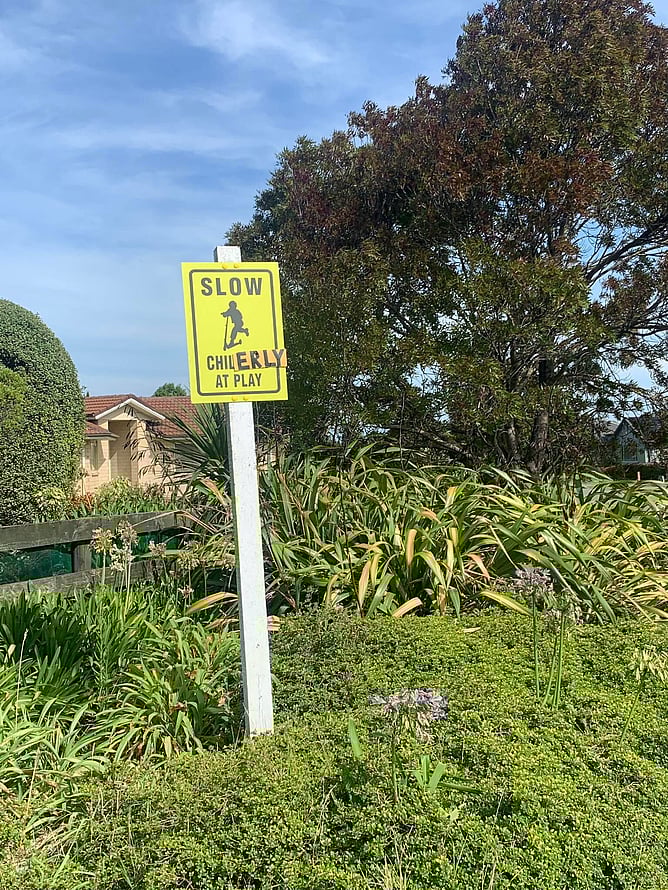
Ultimately this discussion should be the trigger for continued investment in the design of footpath and cycling infrastructure in all NZ communities because shifting on-road problems onto the footpath is not a viable long-term solution. As this country’s population ages, footpaths and the ability to cycle safely within communities has enormous benefit to health, wellbeing, social connection and reduced reliance on a vehicle for small trips.
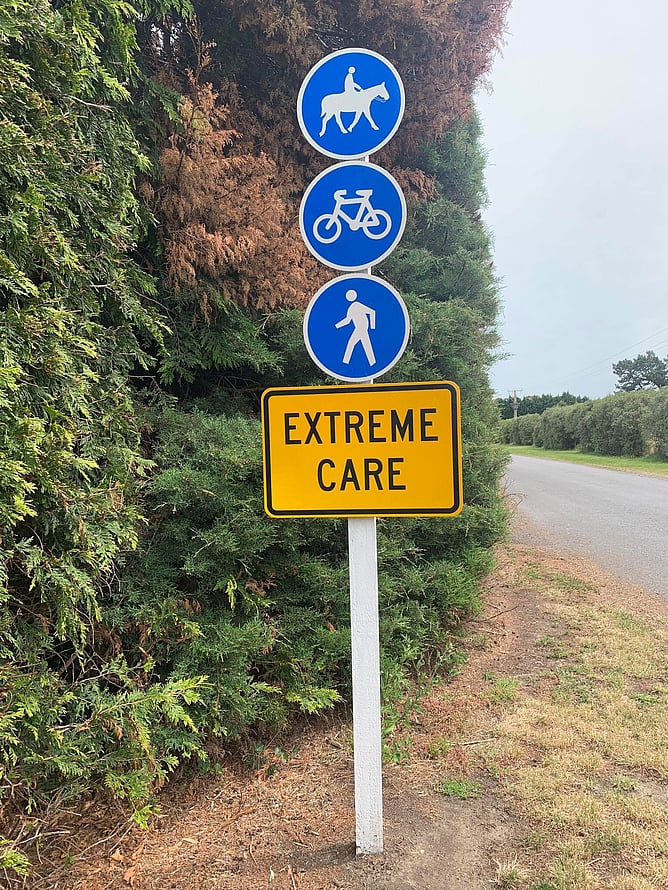
Safely passing walkers and cyclists - The Trust believes these two user groups should be treated the same on the road. Whether a person is walking an animal, running with a pram or cycling on their own or with children the Trust views the risk as equal and a 1.5m passing distance as appropriate. The blanket approach to distance also takes into account the difference speed zones on local roads.
In reading research from Victoria State following an inquiry into the impact of road safety behaviours on vulnerable road users, it found many drivers treated VRUs as an obstacle to move around and there was little reduction in speed. This must be counted in NZ with strong education and messaging around the need to Pass Wide and Slow. Without this, the reality of this Rule Change will not create a safer walking/cycling experience but instead continue to have drivers passing vulnerable road users like an obstacle at high speed.
Data – every effort to reduce harm to vulnerable road users is appreciated and there must be a continued focus by roading authorities beyond this consultation period. Current and specific data for this group of road users isn’t readily available, and the Trust would like to draw decision makers attention to Health NZ fatality statistics that code on-road deaths using hospital records, police investigation, the coroner’s findings and funeral director insight. The approach meets international statistical classification standards. Between 2000-2019 there have been 265 cyclists and 1090 pedestrians killed on the road. This is compared with NZTA Crash Analysis (CAS) data that shows for the same period, 197 cyclists and 743 pedestrians were killed on the road. This snapshot illustrates the fact more VRUs are dying on the road than we are led to believe – same too for horse riders – see below.
Safely passing horse riders or carriage drivers
The Trust does NOT agree with a 1.5m passing distance for equestrians on the road and strongly requests there be a minimum of 2-metres given, irrespective of the speed zone.
Increases risk - The Trust believes anything less than 2-metres increases risk to the three parties involved – rider, horse and driver/passenger. This detracts from the objective of this Rule Change – a safety measure to reduce near misses, serious injury and death on the road. Because this Rule Change doesn’t take into account vehicle speed and the type of vehicle (logging truck verse car/motorbike), the formula must ensure that the space given is at the higher end to accommodate all vehicle types.
Speed – high speed when passing a horse is dangerous. In the UK Highway Code, it recommends vehicles pass at 10mph and 2-metres minimum space is given. There is now a Bill before the House of Commons that aims to strengthen rider safety on the road and take a mandatory approach to speed and passing distance because the level of trauma and incident continues to be high. Road Traffic (Horse and Rider Safety) Bill
Western Australia is beginning to lobby for improved road safety, including support for the pass wide and slow message.
The Trust would like to suggest New Zealand roading authorities use feedback around passing distances to consider guidance or a mandatory speed of 20km when passing a horse and rider on the road.
Pass Wide and Slow – this road safety message is internationally recognised in the UK, Northern Ireland, Colorado, Western Australia, South Africa and for the past two years – New Zealand. Thanks to NZ Police endorsement of the road safety message in 2024 with Trust Chair Julia McLean, there has been strong support for the 2m-passing distance and message of slowing down around a horse, in community and the media. In Sept 2024 and 2025, national awareness rides took place to promote the message – 50 rides in 2024 and 30 rides in 2025. This level of support means a lot of the good work is underway in educating drivers on how they can safely approach and pass a horse on the road. The Trust is rolling this message out to all VRUs because all stand to benefit from the simple action of slowing down and giving space. The Trust encourages roading authorities to work with community to achieve the collective goal of a reduction in near misses, injury and death on the road.
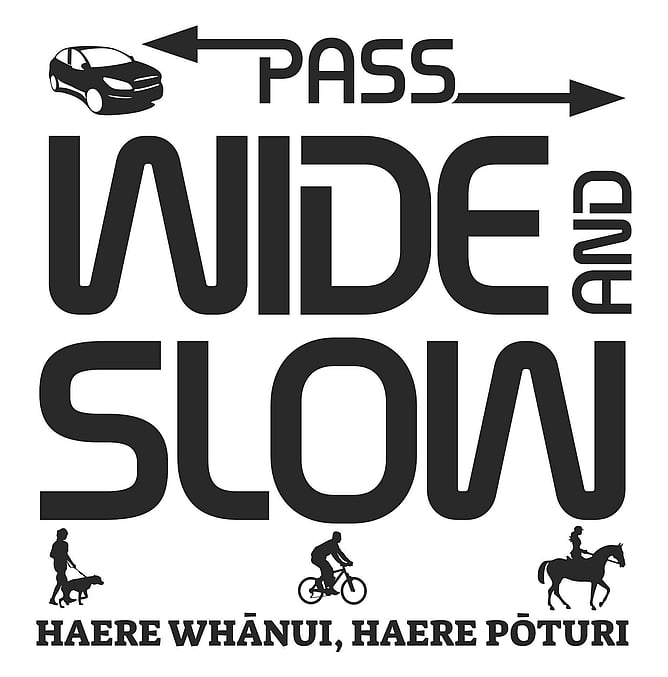
On-road hazards - horses are intelligent animals, but when spooked or scared, their natural instinct is to take flight. In order to help the rider (young or older) appropriate space allows for the ability to mitigate situations out of the riders control. This can be roadside hazards, noisy vehicles/trailers, high speed and closeness, dogs, vehicle horns etc – reducing the potential for injuries.
Here is a snapshot of road riding experiences captured in the Canterbury area. These stories were shared over a short time period. Road Riding Stories
Data - The Regulatory Impact Statement notes that these proposed measures are to improve safety and reduce death and serious injury. The Trust can confirm near misses, injury and trauma is openly shared in the equestrian sector and has been commonplace for decades. What hasn’t been apparent is the number of riders killed whilst riding or driving a horse drawn vehicle in NZ.
Health NZ statistics reveal 41 people have been killed – aged 10-79yrs – between 2000 and 2021. A further 3 deaths sit with Worksafe for the 2022 year. A total of 44 lives lost compared with 8 equestrian recorded deaths (NZTA 1980-2024).
The measures proposed are long overdue and welcomed by the equestrian sector. New Zealand Vulnerable Road User Trust
Enforcement - New Zealand Police do not have the technology to measure passing distances to meet evidential standards, therefore there is no constraint on a passing distance being 1.5m or 2m for cyclists or horse riders. If there is a genuine commitment to improved safety, then authorities must respect feedback from this particular user group and adopt the 2m passing gap that is already supported in community.
Penalty - Increasing the penalty for failing to give appropriate space in passing vulnerable road users is long overdue and will have an effect if the Rule Change is enforced. To date, NZ Police have issued 13 $55 infringements in a 13-year period. Enforcement of the Rule Change needs to be clear for all parties.
Reporting - NZ Police do not have a specific Code to record near miss road riding incidents reported to them by horse riders. We suggest this would be helpful for NZ Police to introduce with this Rule Change for all VRU groups (walkers, cyclists, horse riders) to record much needed data in this area of work. The RIS is clear that data on near misses is not available. Data cannot be retrieved by NZ Police with respect to specific charges relating to horse riders. This may be the case for walkers/ cyclists too, and the Trust suggests a Code be introduced so this data can be easily accessed and used by authorities in future decision making.
Signage - vulnerable road user signage needs to be consistent across Aotearoa New Zealand on local and national roads to promote and educate this Rule Change. Currently the approach to educate drivers is dependent on TAs priority and motivation. Shared roads require consistent national road safety messaging on how to safely approach and pass vulnerable road users. The Trust asks that education, and messaging is equal for all vulnerable road user groups and that NZTA/ Ministry of Transport adopts an approach that prioritises shared use behaviour on our roads.
1. Allow people to ride e-scooters in cycle lanes
Yes, the Trust agrees with allowing e-scooters to be legally ridden in cycle lanes. Further to this the Trust would like to see guidelines encouraging e-scooter riders to use off-footpath facilities e.g cycle lanes when available.
The Trust is however concerned many cycle lanes are positioned right beside motor vehicle parking. E-scooters on average travel faster than cyclists and are less agile, so are therefore at more risk from dooring. In conjunction with this law change, we request the standard cycle lane design is reviewed to consider the risk of dooring for e-scooter riders.
The Trust would welcome the opportunity to work with NZTA, the Ministry of Transport and NZ Police on the development of education campaigns, national signage guidelines, data improvements and wider implementation of these measures to support safer outcomes for vulnerable road users.
Thank you for the opportunity to submit.
Kind Regards,
NZVRU Trust
Public consultation closes March 25 - NZTA submission form