A COLLABORATIVE RESPONSIBILITY
CREATING SAFER ROADS TAKES ALL OF US
Road safety depends on the combined efforts of those working in advocacy, education, and enforcement - and the everyday actions of drivers, riders, and walkers alike.
The New Zealand Vulnerable Road User Trust (NZVRU Trust) goes one step further, supplying high-visibility gear and supporting initiatives that make safety practical, accessible, and visible on our roads.
OUR PURPOSE IN ACTION
The NZVRU Trust works to create meaningful change in how New Zealand approaches road safety for vulnerable road users (VRU). Our mahi includes:
Being a point of contact for the Vulnerable Road User Submission currently before Parliament
Promoting and socialising the Vulnerable Road User Hierarchy, aiming to embed it into national awareness and driver education
Engaging in public consultation at both local and central government levels to ensure VRU are recognised and included
Advocating for high visibility gear and helmet use among equestrians and riders
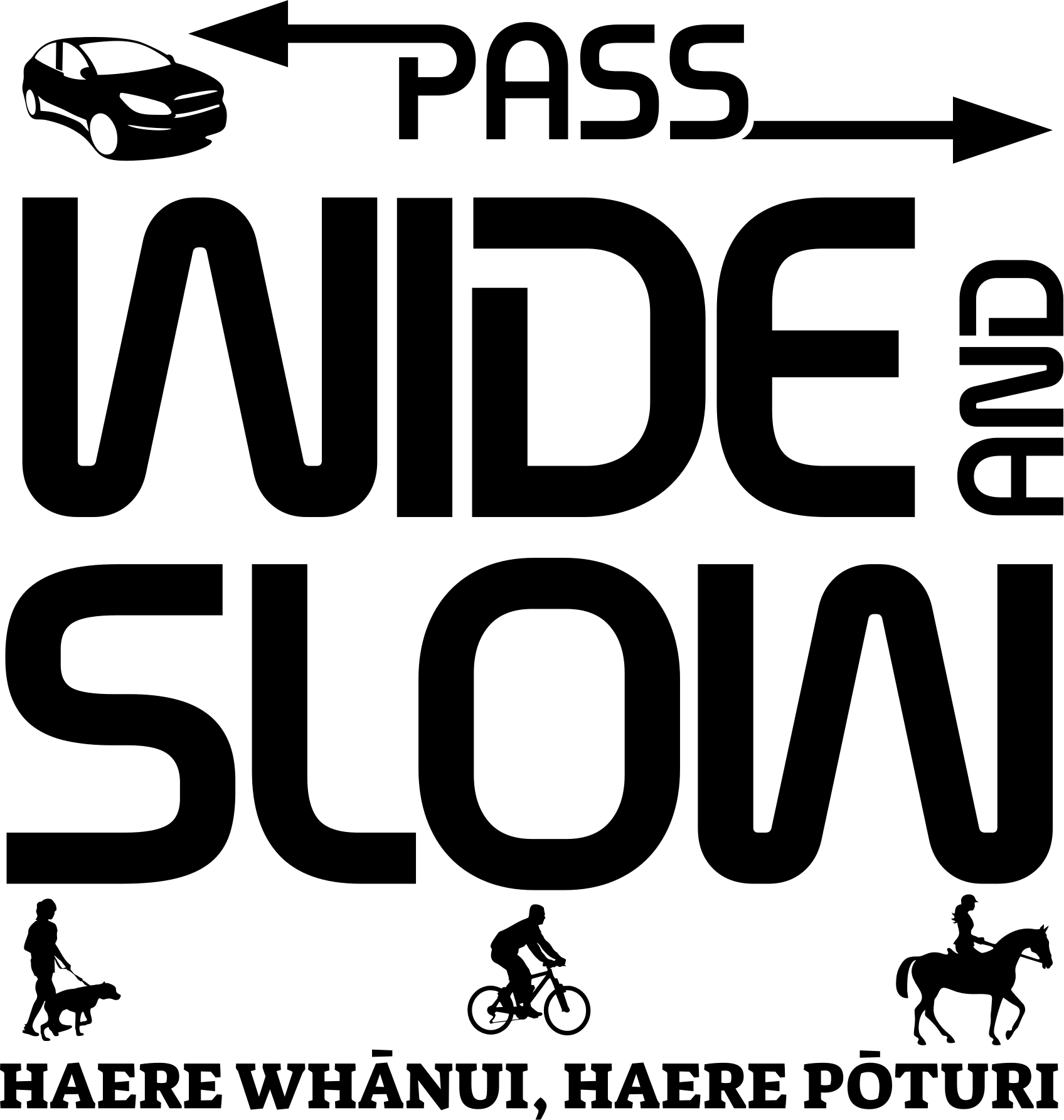
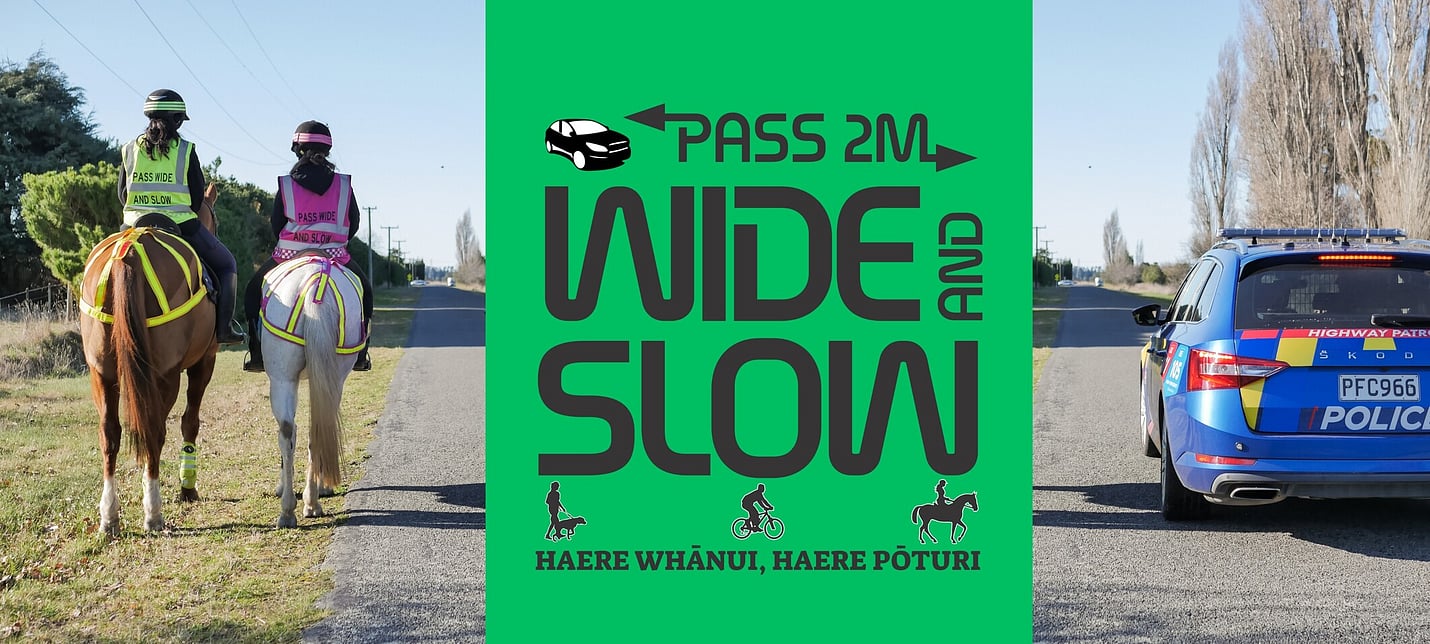
Promoting the Pass Wide and Slow message across communities for all VRU
Collaborating with funding partners to make safety equipment accessible to all
Working with stakeholders and organisations committed to reducing harm on New Zealand roads.
OUR MISSION IS SIMPLE
To lead a national behaviour change that encourages drivers to slow down and give space when passing vulnerable road users.
We do this by:
Advancing the education of the public in issues of road safety for vulnerable road users including horse riders, cyclists and pedestrians
Making road safety gear accessible to road users
Raising public awareness on road safety matters
Advocating for the safety of road users.
RESEARCH BEHIND NEW FATALITY STATISTICS
Never-before-seen fatality figures for the number of people killed while riding or driving a horse-drawn vehicle on New Zealand roads were tabled in Parliament by Trust Chair Julia McLean.
The case for recognising Vulnerable Road User status in transport legislation, and including this in road safety education, is currently being investigated by the Transport and Infrastructure Select Committee.
What the data shows
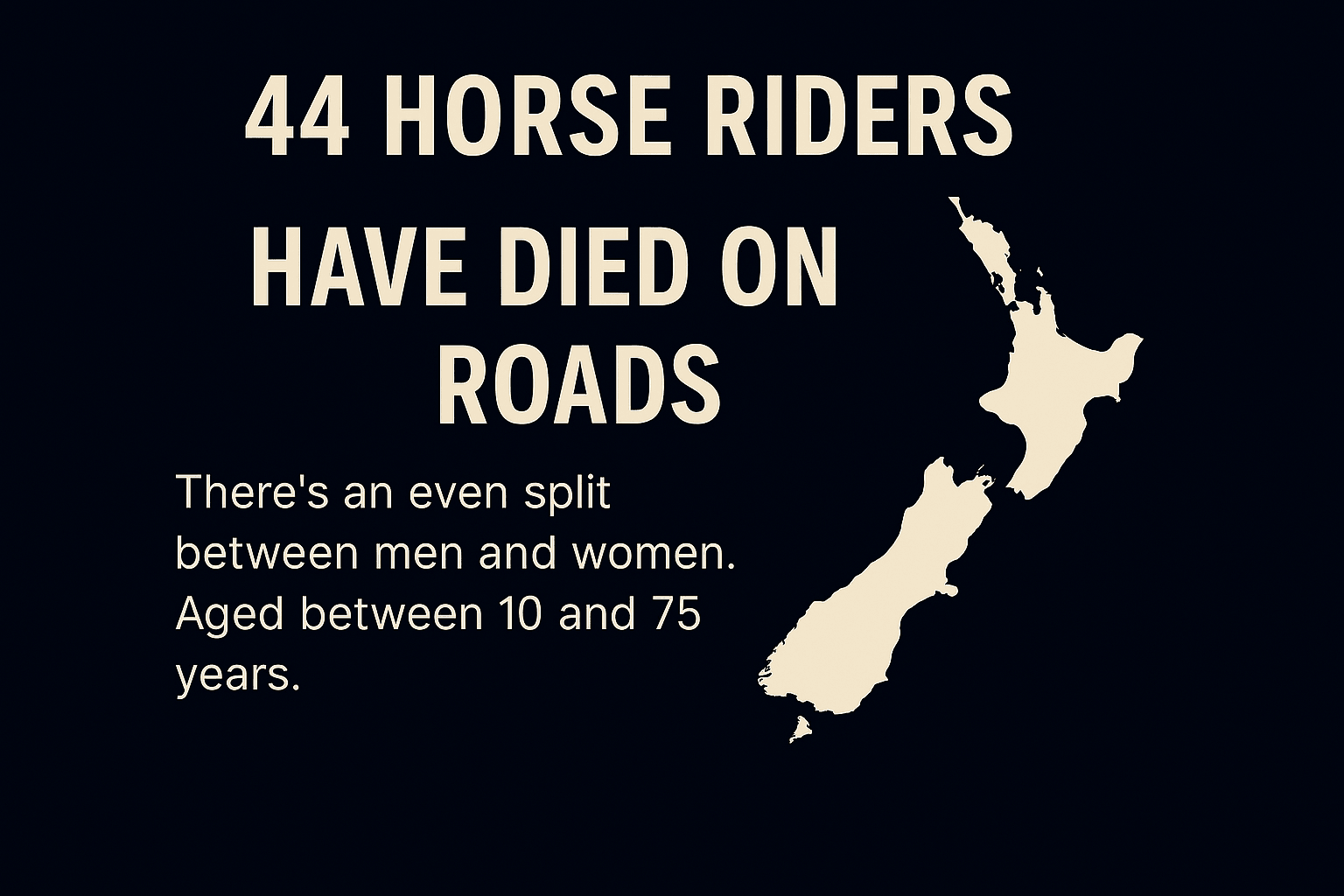
Health New Zealand (HNZ) mortality data reveals 41 equestrians, aged between 10 and 79, were killed between 2000 and 2021.
HNZ data is validated through multiple sources including police investigations, coroners, funeral directors, and hospital records, and is released every six months.
There is a specific code for “animal rider or occupant on a horse-drawn vehicle injured in a transport accident,” ensuring the data meets international statistical classifications.
WorkSafe has recorded three road-riding fatalities for 2022.
NZ Transport Agency (NZTA) Crash Analysis System (CAS) data shows eight equestrian deaths from fatal crashes between 1980 and 2024.
WHY THE RESEARCH MATTERS
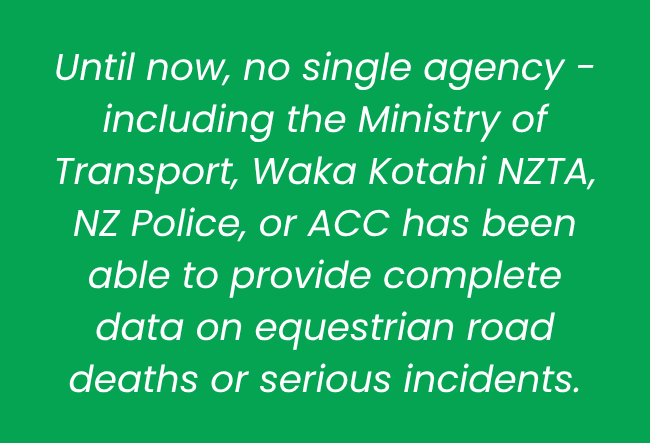
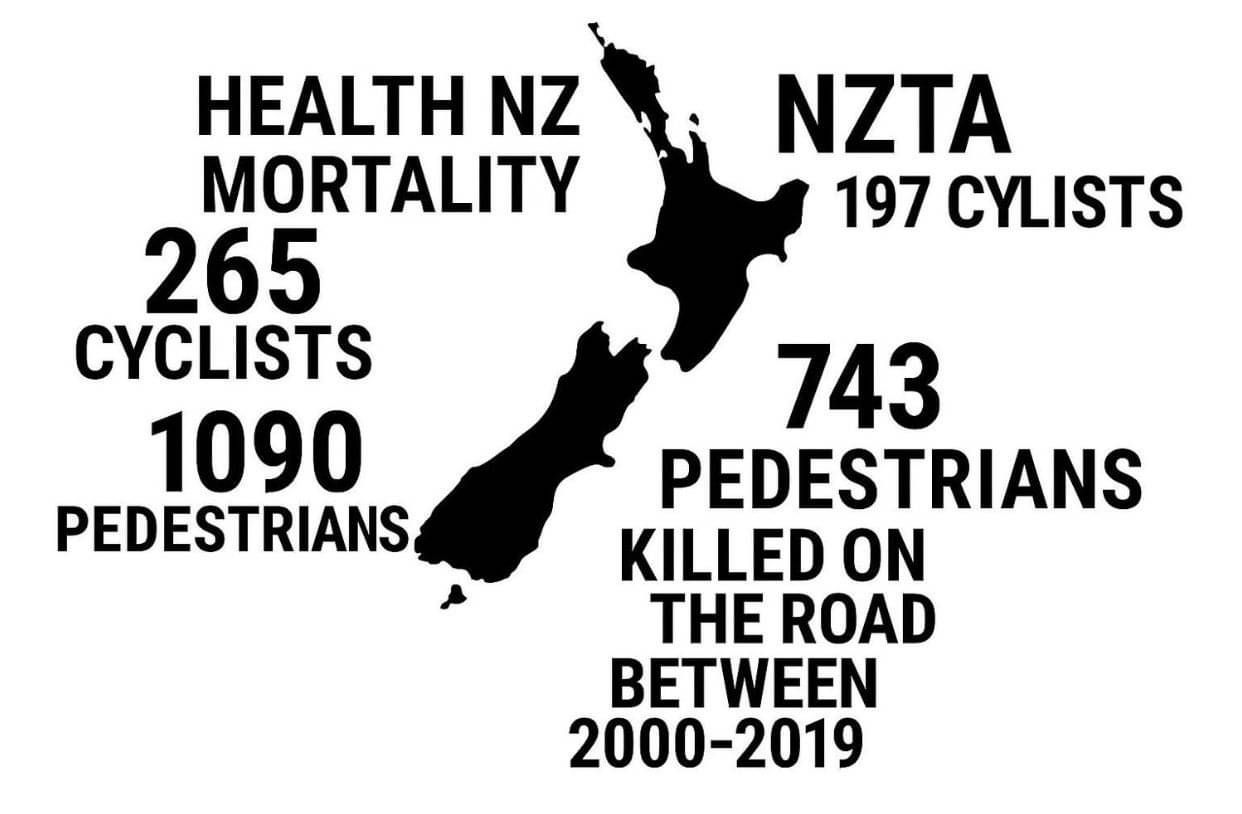
Following a Select Committee comment that cyclist statistics were “all over the place,” Julia McLean undertook a deeper investigation. She sourced updated Health NZ fatality figures and compared them with NZTA data - revealing further inconsistencies in how incidents are recorded.
The Crash Analysis System (CAS) does not capture incidents that don’t involve another vehicle.
For example, if a passing car spooks a horse, causing a rider to fall and later die, this tragedy is not recorded in the official CAS data.
The NZVRU Trust remains committed to its advocacy and awareness work to ensure no further lives are lost or devastated because of unsafe driving behaviour, often caused simply by drivers not knowing what to do.
HONOURING THOSE WE’VE LOST
The NZVRU Trust extends its sincere condolences to the whānau and friends of every rider killed or injured on our roads.
Their stories strengthen our resolve to make New Zealand’s roads safer for all.