PROTECTING THOSE WHO ARE VULNERABLE
HAVE YOU EVER HEARD OF THE VULNERABLE ROAD USER HIERARCHY?
Many people haven’t - but once you do, it makes sense.
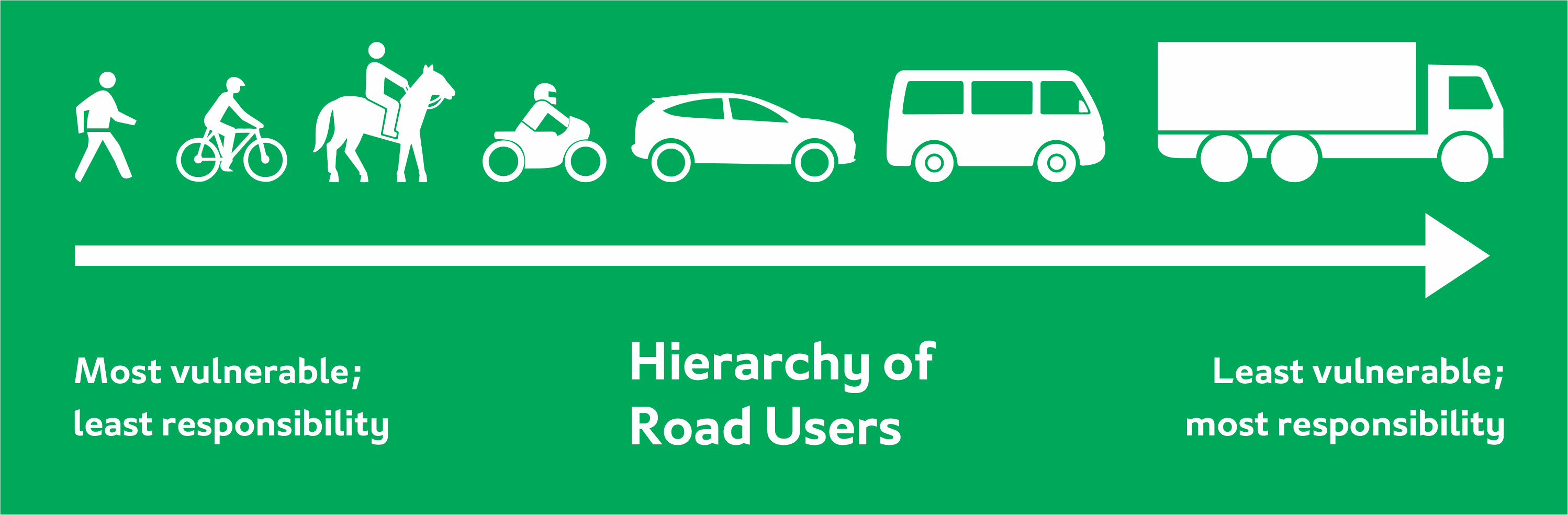
It’s a simple concept: the bigger and more powerful your vehicle, the greater your responsibility to protect those who are more vulnerable.
When the UK Highway Code was amended in 2022, it introduced this hierarchy, placing the most vulnerable road users at the top and those capable of causing the most harm at the bottom.
HOW IT WORKS
The hierarchy gives priority to those most at risk:
Pedestrians – especially children, the elderly, and disabled people
Cyclists
Horse riders and carriage drivers
Motorcyclists
These are followed by:
Drivers of cars, vans, and trucks, who have a greater potential to cause serious harm and therefore a higher duty of care.
Note: Horses and cyclists are considered equally vulnerable under this hierarchy.
The Vulnerable Road User Hierarchy doesn’t remove responsibility from any group - it simply clarifies that those with more power to cause harm must take greater care to reduce danger to others.
Every road user still has a role to play in being alert, patient, and respectful, whether on foot, in the saddle, or behind the wheel.
WHO IS A VULNERABLE ROAD USER?
A vulnerable road user (VRU) is anyone not enclosed in a motor vehicle and therefore at greater risk of injury or fatality in a collision.
Examples include:
Pedestrians (children, elderly, disabled people)
Cyclists
Horse riders and carriage drivers
Mobility device users (scooters or wheelchairs)
Highway or road workers performing maintenance or construction
WHY THIS MATTERS FOR NEW ZEALAND
Introducing and understanding a Vulnerable Road User Hierarchy in Aotearoa would help shift attitudes towards shared responsibility and safer behaviour on our roads.
It aligns with the NZVRU Trust’s mission to promote respect, patience, and awareness - ensuring everyone can travel safely, no matter how they choose to move.