Data and the story it can and can't tell.
Numbers are important. They justify decisions, priorities and spend.
In the case of national road safety initiatives around legislation, education and enforcement - it's no different.
There are two sets of data that record road fatalities in New Zealand, and yet both show different figures. Only one data set informs decision making.
Health New Zealand (HNZ) uses an international classification code system to record fatalities that is informed by police investigations, hospital records, the coroners reports, and is released every six-months.
The New Zealand Transport Agency's (NZTA) manages the Crash Analysis System (CAS), and its data is informed by police investigations. It records only incidents that involve a vehicle.
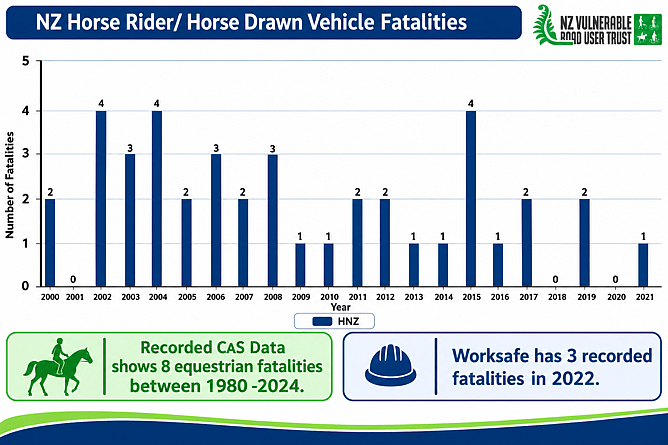
For decades horse rider safety has been considered a non-issue in road safety, partly due to their status as an 'other' road user and also because fatality stats aren't high. The CAS has recorded 8 equestrian deaths between 1980 and 2024.
However, when you move in the equestrian world, the anecdotal stories of near misses, high speed and injury is rife. In December 2024, after a tip from ACC to ask HNZ, I was sent the data above. I still remember the shock in reading the ages of those killed.
Fast forward, and in June 2025 this data was tabled at Parliament's select committee as part of a push to formally recognise horse riders as vulnerable road users. What has fallen out of that work to date is the inclusion of equestrians in the new mandatory minimum 1.5m passing distance rule. The HNZ data had never been seen before.
Turning our attention to cyclist deaths on New Zealand roads, and the average fatality rate per year, according to CAS data, is around 9.
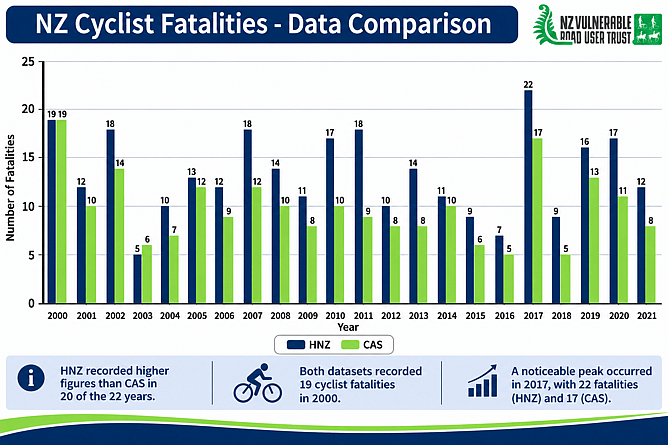
Currently CAS data shows 15 people have been killed whilst riding a bike in 2026. In 2025, 9 people died, in 2024 there were 9, 2023 there were 7 and in 2022 there were 19 deaths.
One death is too many.
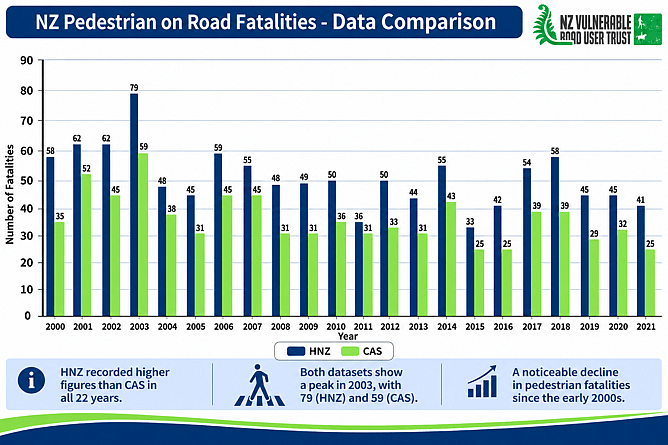
The number of pedestrian deaths, and variation between the two data sets paints another grim picture. Sadly 33 pedestrians (people) have died in 2026 according to CAS data. In 2025 that figure was 18, and in 2024 it was 20, 2023 it was 23 and 2022 it was 33.
All incidents and crashes on the road are preventable. Police focus primarily on four contributing factors - RIDS - restraints, impairment, distraction and speed.
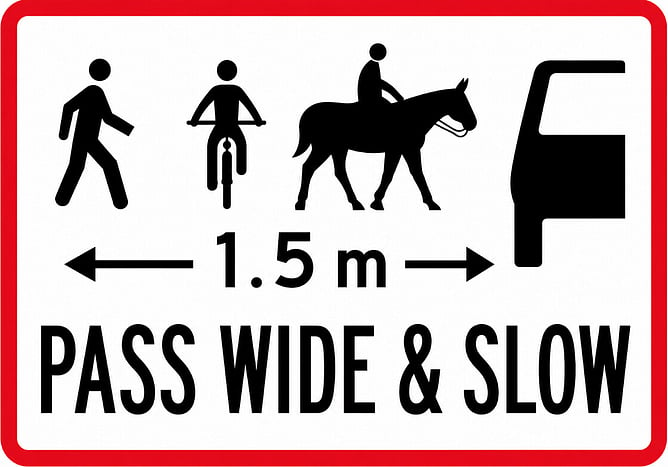
To connect those contributors to improving the safety of people on foot, bike or horse - PASS WIDE AND SLOW. A simple but life-saving action behind the wheel.
LOOK AGAIN, LOOK AGAIN, LOOK AGAIN - A simple life saving action drivers should do at intersections and roundabouts.
BE SEEN - wear bright coloured or high visibility gear, light up your bike with flashing lights or dress your horse in some form of high vis. Small measures taken on a cumulative scale, contribute to a greater chance of being seen sooner rather than later.
Finally, Section 8 of the Land Transport Act states -
Drivers are not to be careless or inconsiderate. A person may not drive a vehicle, or cause a vehicle to be driven, carelessly or without reasonable consideration for other persons.
The Trust is committed to advocating, educating and working with decision makers and all road safety agencies and stakeholders to reduce the significant trauma on our roads.
When you see a person on foot, bike or horse on the road ...